
What Is Soft Wash Roof Cleaning and How Does It Work?
Roof cleaning is an important part of maintaining a home, but not every roof should be cleaned with high-pressure water. Over time, roofs can develop black streaks, algae, moss, lichen, and other organic growth that affect their appearance and may contribute to surface deterioration. Understanding how roof soft washing works can help homeowners choose an appropriate cleaning method for their roof material.
Soft wash roof cleaning uses low-pressure water and specialized cleaning solutions to loosen and remove organic growth. Unlike traditional pressure washing, it does not rely on strong water pressure to clean the roof. Instead, the cleaning solution does much of the work. This approach is often used on asphalt shingles and other roofing materials that can be damaged by excessive pressure.
In this guide, we’ll explain what soft wash roof cleaning is, how the process works, which roof problems it addresses, and what homeowners should know before choosing this cleaning method.
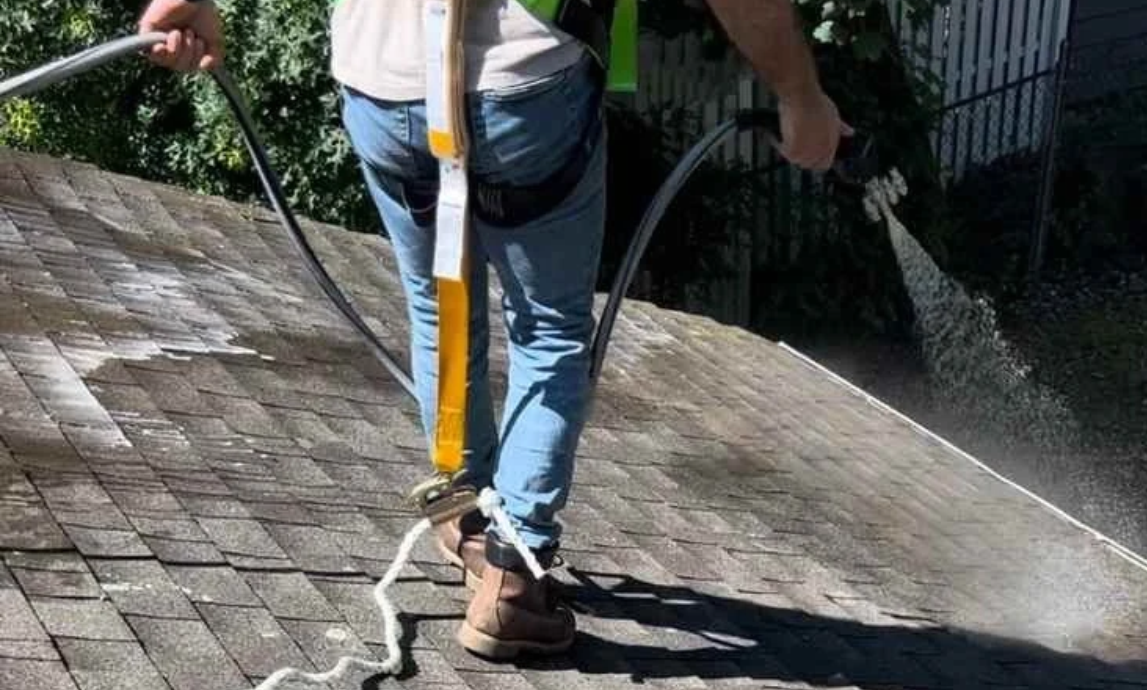
What Is Soft Wash Roof Cleaning?
Soft wash roof cleaning is a method of cleaning roofing materials with low-pressure water and a suitable cleaning solution. The solution helps break down organic growth, including algae, moss, and lichen, so it can be removed without blasting the roof with high-pressure water.
Many dark streaks on asphalt shingles are caused by a type of algae that grows in damp areas and spreads across the roof. Moss and lichen can also develop where moisture and shade are common.
The goal of soft washing is to treat this buildup while reducing the risk of damaging shingles, loosening roofing granules, or forcing water underneath roofing materials.
Soft washing is not the same as simply rinsing a roof with a garden hose. It requires an appropriate cleaning solution, controlled application, and care around plants, gutters, windows, and nearby surfaces.
How Does Soft Wash Roof Cleaning Work?
The process involves several steps. The exact method depends on the roofing material, the type of buildup, and the condition of the roof.
1. Inspecting the Roof
Before cleaning begins, the roof should be checked for visible damage, loose shingles, worn areas, blocked gutters, and other concerns. This inspection helps determine whether cleaning is suitable and identifies areas that may need attention first.
Steep slopes, fragile materials, and difficult access points also affect how the work should be carried out.
2. Preparing the Surrounding Area
Cleaning solutions can affect plants and some exterior materials if they are not handled correctly. Before application, the surrounding area should be prepared.
This may include:
Protecting or pre-wetting nearby plants as appropriate.
Checking where roof runoff will flow.
Closing windows and securing nearby outdoor items.
Identifying surfaces that require additional protection.
Good preparation helps reduce the risk of unwanted contact with landscaping and other parts of the property.
3. Applying the Cleaning Solution
A suitable roof-cleaning solution is applied using low-pressure equipment. The solution is selected according to the roofing material and the type of organic growth present.
It is important to follow product directions and use the correct concentration. Stronger solutions are not automatically better, and improper application can damage plants, finishes, or other surfaces.
4. Allowing the Solution to Work
The cleaning solution needs time to act on the buildup. This helps loosen or treat algae and other organic growth without depending on forceful water pressure.
The required time varies with the product, weather, roof condition, and amount of growth. The solution should not be allowed to dry or remain longer than its instructions permit.
5. Checking the Results
After treatment, the roof is checked to see how much buildup has been removed or treated. Some loosened material may come away during the process, while certain types of moss or lichen may take time to weather away naturally.
The roof should not be aggressively scrubbed or blasted just to make it look clean immediately. The cleaning method should remain suitable for the roofing material.
What Does Soft Wash Roof Cleaning Remove?
Soft washing is commonly used to treat organic growth and staining on suitable roofs.
Black Streaks and Roof Algae
Black streaks on asphalt shingles are often associated with algae. These marks can spread across the roof, especially in areas that receive limited sunlight or stay damp for long periods. A suitable soft-wash treatment can help address this type of growth.
Moss
Moss can hold moisture against roofing materials. As it grows, it may lift or disturb shingles, particularly when removed by forceful scraping or high-pressure washing. Moss should be treated carefully, following methods appropriate for the roof type.
Lichen
Lichen can attach firmly to roofing surfaces and may be difficult to remove quickly. Treatment may reduce its growth, but complete visual removal can take time. Trying to scrape it off aggressively can damage the roof.
Soft washing is not intended to repair missing shingles, roof leaks, or structural damage. Those problems require appropriate roof repairs.
Is Soft Washing Better Than Pressure Washing for Roofs?
High-pressure washing uses strong water pressure to remove dirt and buildup. It can be useful on certain durable surfaces, such as some concrete areas, when the pressure and technique are appropriate.
Roofs are different. High pressure can loosen shingle granules, damage fragile materials, lift shingles, or force water into areas where it should not go. For many asphalt-shingle roofs, a low-pressure cleaning approach is generally more suitable.
However, soft washing is not automatically right for every roof. Metal, tile, slate, and other roofing materials have different requirements. The roof manufacturer’s care guidance and the condition of the material should guide the cleaning method.
The key is to use the least aggressive method that can effectively address the buildup without harming the roof.
What Are the Benefits of Soft Wash Roof Cleaning?
Soft washing can offer several practical benefits when performed correctly.
Reduced pressure: It avoids relying on forceful water streams to remove organic growth.
Treatment of algae and moss: The cleaning solution targets common biological buildup.
Improved appearance: Treating black streaks and surface growth can make a roof look cleaner.
Suitable for many shingle roofs: Low-pressure application can be more appropriate than high-pressure washing for materials that are easily damaged.
Less aggressive cleaning: It can reduce the need for forceful scraping or scrubbing.
Results depend on the roof material, the severity of the growth, the cleaning solution, and the application method. Soft washing does not guarantee that stains will disappear immediately or that organic growth will never return.
How Often Should a Roof Be Soft Washed?
There is no single cleaning schedule that works for every roof. The frequency depends on the roofing material, local weather, nearby trees, shade, moisture, and the amount of algae or moss present.
A roof surrounded by trees may develop organic growth faster than one exposed to more sunlight. Areas that stay damp for long periods may also need closer attention.
Instead of cleaning the roof on a fixed schedule without checking its condition, look for visible black streaks, green patches, or moss growth. Avoid unnecessary cleaning, since even gentle methods should be used only when appropriate.
What Should Homeowners Know Before Roof Soft Washing?
Before arranging a roof cleaning, consider these important points:
Roof condition: Damaged, loose, or deteriorating shingles may need repair before cleaning.
Roof material: The cleaning method and solution should be suitable for the specific material.
Weather: Wind, rain, and extreme heat can affect application and runoff management.
Plant protection: Cleaning solutions and runoff should be managed carefully around landscaping.
Safety: Roofs can be steep and slippery. Working at height requires proper training and safety equipment.
Homeowners should also understand that soft washing is a cleaning method, not a roof repair service. If a roof has leaks, missing shingles, or structural problems, those issues should be assessed separately.
Soft Washing in Different Service Areas
Weather, tree coverage, and moisture levels can affect how quickly roofs develop algae and moss. These factors are worth considering when planning exterior maintenance in different areas.
Soft washing Orange County NY: Shaded roof sections and moisture after rainfall can contribute to algae or moss buildup. Regular visual inspections can help homeowners identify changes early.
Soft washing Rockland County NY: Homes with mature trees may experience leaf debris, damp roof areas, and organic growth that require attention.
Soft washing Morris County NJ: Seasonal weather changes can leave roofs exposed to moisture, debris, and biological growth.
Soft washing Bergen County NJ: Roofs with limited sunlight or nearby vegetation may develop dark streaks and moss over time.
Soft washing Passaic County NJ: Shaded areas and persistent moisture can encourage organic growth, making roof condition checks useful throughout the year.
These are general maintenance considerations, not a guarantee that every roof in these locations needs cleaning. The roof's material, condition, and visible buildup should determine the appropriate approach.
Final Thoughts
Soft wash roof cleaning is a low-pressure method for treating algae, moss, lichen, and dark streaks on suitable roofing materials. Understanding the process helps homeowners recognize when cleaning may be useful and why the correct technique matters. Roof condition, material, and the type of buildup should always guide the decision. When considering roof soft washing, choose a method that addresses the growth while protecting the roofing surface.
Frequently Asked Questions
-
Soft wash roof cleaning uses low-pressure water and a suitable cleaning solution to treat algae, moss, lichen, and other organic buildup on appropriate roofing materials.
-
It is commonly used on asphalt shingles because it avoids the force of high-pressure washing. However, the cleaning solution, application method, and roof condition must be considered carefully.
-
Soft washing can treat algae responsible for many black roof streaks. The visible results depend on the type of staining, the roof's condition, and the cleaning method used.
-
The time depends on roof size, slope, accessibility, the amount of organic growth, and preparation requirements. Larger or more complicated roofs generally take longer.
-
DIY roof cleaning carries risks, including falls, chemical exposure, and damage from incorrect application. Working on a roof requires appropriate safety equipment and knowledge of the roofing material and cleaning solution.
-
Soft washing relies on low-pressure application and a cleaning solution to treat organic growth. Pressure washing uses stronger water pressure to remove dirt and buildup, making it more suitable for certain durable surfaces than for many shingle roofs.